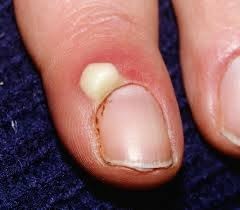
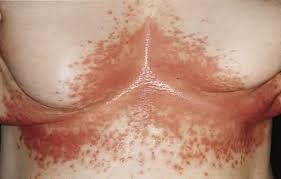
 Dear Colleagues, Magistral compounding is of great importance as an alternative solution in the preparation of so-called orphan drugs—medications that are no longer available on our shelves for any reason. I am sharing this formula from the German Standard Formulas as the formula of the week, which can replace the medication we used to dispense to our patients under the name Mycostatin ointment (100,000 IU/g) until recently in our country. It is used in the treatment of fungal skin infections, especially those caused by Candida albicans (monilia), monilia-related paronychia, fungal infections resulting from urine-induced irritation in infants, and monilial infections under the breasts and in intertriginous areas. Paronychia is an infection of the skin along the edges of the nail or the epidermal layer surrounding the nail. It frequently occurs as a result of manicures, nail biting, or trauma to the skin at the nail tip. Paronychia infection involves both aerobic and anaerobic bacteria. Nystatin is essentially a virtually non-toxic, non-sensitizing drug that is well tolerated even upon prolonged application by patients of all ages, including frail infants. If irritation occurs as a result of topical application, the medication should be discontinued. The medication can be applied to the affected area once or several times a day as needed. Application of the medication should be continued until complete healing occurs. Store at room temperature. If a hypersensitivity reaction occurs, the drug must be discontinued immediately and appropriate measures should be taken.Formula:
Rp.
Nystatin 7 Mio I.U.
Zinc oxide 50.0 g
Magnesium stearate 0.5 g
Medium-chain triglycerides to 100.0 g
Ingredients in the formula:
Nystatin- Fungicidin- Nistatina [Ph. Eur. 4]- Nystatinum [Ph. Eur. 4; Ph. Int. III]:
 Nystatin is an antifungal antibiotic obtained from certain strains of Streptomyces noursei. It mainly contains tetraene compounds, the principal of which is Nystatin A1. Nystatin A1 is a yellow to light brown, hygroscopic powder with a characteristic odor. Calculated on the dry basis, nystatin must contain not less than 4400 units of nystatin A1 per mg. According to the British Pharmacopoeia (BP), its solubilities are: Very slightly soluble in water; practically insoluble in alcohol, chloroform, and ether. According to the United States Pharmacopeia (USP): Slightly soluble in water; slightly or sparingly soluble in alcohol, methyl alcohol, n-propyl alcohol, and n-butyl alcohol; insoluble in chloroform and ether. The pH of its 3% aqueous suspension ranges between 6.5 and 8.0. In terms of chemical structure, it is very similar to amphotericin B. Both are polyene antifungal agents. Due to its lack of absorption from the gastrointestinal tract and its toxicity, nystatin is not used in the treatment of systemic fungal infections. Although suggested for the treatment of dermatophyte infections such as tinea capitis, it is only effective against Candida, and the conditions in which it is most useful are oropharyngeal, cutaneous, mucocutaneous, and vulvovaginal candidiasis. A liposomal formulation of nystatin intended for systemic use is under clinical investigation. It is thought that this liposomal formulation may be effective against Aspergillus.
Like amphotericin B, nystatin binds to sterols found in both fungal and human cell membranes. Although nystatin mostly exhibits fungistatic activity in vivo, it may exhibit fungicidal activity at high concentrations or against extremely susceptible microorganisms. It exhibits a higher affinity for ergosterol found in fungal cell membranes compared to cholesterol; nevertheless, it is too toxic to be used systemically. As a result of this binding, the integrity of both fungal and human cell membranes is impaired. This disruption leads to the leakage of potassium and other cellular components from inside the cell. Because bacterial cell membranes do not contain sterols, nystatin is ineffective against bacteria. Nystatin is also ineffective against protozoa, trichomonads, and viruses. Nystatin is administered orally, but is not absorbed from the gastrointestinal tract. When given orally, it is excreted almost entirely unchanged in the feces. It is used only topically. It is not absorbed through intact skin or mucous membranes.Zinc oxide- Zinci oxidum- Oxyde de zinc- Zinkoxid [ASK; Ph. Eur.]
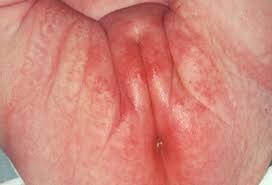 Zinc oxide is a white or yellowish-white, odorless, amorphous, soft, gritty-free powder. It slowly absorbs carbon dioxide from the air. It is practically insoluble in water; soluble in dilute mineral acids. Zinc oxide is a mild astringent with weak antiseptic properties. It is used topically to provide protection against sun rays. In such preparations used for photoprotection, it is often combined with titanium dioxide. It is also applied topically in cases of eczema, abrasions, burns, friction-related skin damage, diaper rash, and mild skin irritations. Since it does not dissolve in water, it is applied in the form of powder, ointment, or paste. Zinc oxide ointment contains 20% and zinc oxide paste contains 25% zinc oxide. Calamine is a skin antiseptic containing 98% zinc oxide. Zinc oxide is also used in combination with coal tar or ichthammol in the treatment of eczema.
Zinc oxide is also included in the composition of dental cement used as a filling material in dentistry. When mixed with phosphoric acid, it forms a hard material largely composed of zinc phosphate; the mixture of this material with clove oil and eugenol is used in the preparation of temporary fillings. When applied topically, zinc exhibits astringent and weak antiseptic effects. In addition to its astringent and antiseptic effects, zinc sulfate is also used in the form of an ophthalmic solution to clear mucus from the outer surface of the eye. However, it also causes mild vasodilation and does not have a decongestant effect. Zinc oxide is applied topically. Since it does not dissolve in water, it is used as a skin antiseptic in the form of powder, ointment, or paste. Zinc oxide is not absorbed through the skin.Magnesium stearate- Magnesii stearas [IP3]- Magnesium stearate [BP; NF; P.Cx.79; USAN]:Magnesium stearate is used as a lubricant in granulation during the manufacturing process of tablets and capsules. Additionally, it is included in the composition of dusting powders and barrier creams. According to the European Pharmacopoeia (Ph. Eur. 6.5), magnesium stearate is a mixture of solid organic acids consisting mainly of variable proportions of magnesium stearate (C36H70MgO4 = 591.2) and magnesium palmitate (C32H62MgO4 = 535.1) of vegetable or animal origin. It contains 4.0% to 5.0% of magnesium, calculated with reference to the dried substance. The fatty acid fraction shall contain not less than 40% stearic acid, and the sum of stearic acid and palmitic acid shall not be less than 90%. It is a very fine, light, white or almost white powder, greasy to the touch. It is practically insoluble in water and in anhydrous alcohol. According to the United States Pharmacopeia–National Formulary (USNF 27), magnesium stearate is a compound of magnesium with a mixture of solid organic acids and consists mainly of variable proportions of magnesium stearate (C36H70MgO4 = 591.2) and magnesium palmitate (C32H62MgO4 = 535.1).Neutral oil- Medium-chain triglycerides- Caprylic/capric triglyceride [INCI]- Triglyceride, mittelkettige [Ph.Eur.]- Triglycerides, medium-chain [BP; NF]:Medium-chain triglycerides are used in pharmaceutical preparations as emulsifiers, suspending agents, and solvents. Their spreadability on the skin is good and they do not affect skin respiration. In addition, their skin penetration is good and they exert a strong emollient effect on the skin. Other important characteristics include not forming a visible film layer on the skin, being a good solvent, and having high compatibility and oxidative stability. Fractionated coconut oil is a source of medium-chain triglycerides. Medium-chain triglycerides are prepared from oil obtained by extraction from the hard and dried parts of the endosperms of the Cocos nucifera L. (Palmae) plant. They are obtained by fractionating the fatty acids resulting from the hydrolysis of the fixed oil and subsequent esterification. Therefore, medium-chain triglycerides can be defined as a mixture of saturated fatty acid triglycerides. They contain not less than 95% of saturated caprylic and capric acids. It is a colorless or slightly yellowish oily liquid. It is practically insoluble in water; miscible with alcohol, methylene chloride, petroleum ether, and vegetable oils. It should be stored in fully filled and well-closed containers and protected from light. Due to incompatibility with polystyrene, high-density polyethylene, and polyvinyl chloride, the use of low-density polyethylene, polypropylene, glass, or metal packaging materials is recommended for medium-chain triglycerides.
Obtained from the hard and dried parts of the endosperms of the Cocos nucifera L. (Palmae) plant by extraction followed by special processing, these medium-chain triglycerides are digested more rapidly than long-chain triglycerides, and are therefore used in conditions involving fat malabsorption such as cystic fibrosis, as well as in preparations formulated for parenteral nutritional support.Preparation of the Formula:In a glass mortar, the calculated amounts of Nystatin, Zinc oxide, and Magnesium stearate are mixed and powdered. Coconut oil is gradually added to bring the formula to 100 g. The shelf life of the preparation in a glass or plastic bottle is 6 months.
Wishing you a good week…
Source;
- Standardisierte Rezepturen 2017.
- RxMediaPharma®2016 Interactive Drug Information Resource
Specialist Pharmacist Ahmet Nezihi Pekcan
Pekcan Pharmacy – Konya
[email protected]
Tel: (332) 3520657
http://www.majistralformul.com/