
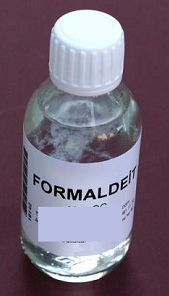
 Dear Colleagues, this week we will examine a solution known by the names Formaldehyde, Formalin, and Formol, which is a bactericidal disinfectant and is also effective against fungi and viruses. Formaldehyde, generally used in the form of dilute solutions, is also utilized for the inactivation of viruses in vaccine production. Formaldehyde is a clear, colorless liquid with a characteristic pungent odor. It is miscible in all proportions with water and alcohol. According to the British Pharmacopoeia (BP 1993), formaldehyde solution contains 34.5–38% (w/w) formaldehyde. It contains small amounts of methyl alcohol and formic acid. Methyl alcohol is present as a stabilizer. Methyl alcohol retards the polymerization of formaldehyde into paraformaldehyde, which is a solid substance. According to the United States Pharmacopeia (USP 23), formaldehyde solution contains not less than 36.5% or 37.0% (w/w) formaldehyde. Inhalation of the solution is hazardous to health; contact with plastics should be avoided, and it should be stored in airtight, dark-colored glass containers at temperatures between 15–25°C.
It is strongly irritating to mucous membranes and especially to the conjunctiva. Its disinfectant properties are very strong, and it is used in the disinfection of instruments and laundry. Its solutions are used caustically for the destruction of dental pulp/nerves. It is effective against excessive sweating of the feet. It is incompatible with ammonia, metal salts, and oxidizing substances. While formaldehyde vapors irritate the eyes and cause coughing, respiratory spasm, asthma, pneumonia, and dysphagia (difficulty swallowing) in the nose and respiratory tract, high concentrations of formaldehyde solution also cause skin rashes and allergic contact dermatitis.
A 3% formaldehyde solution is used in the treatment of warts on the hands, palms, and soles of the feet. Although it is quite irritating to mucous membranes, it is used intraorally at a concentration of 10% as an antiseptic. In dentistry, it is used in the treatment of toothache, inflammation, and infections.
Preparations containing formol in the Spanish National Formulary:
1) Formula used in dental preparations to relieve toothache:
Rp.
Solution alcoholica de formol al % 10 …… 100 ml
When calculating the required percentage of formaldehyde in the formula, we must remember that the stock formaldehyde solution in our pharmacies is 40%. When preparing the formula, first calculate and prepare the formaldehyde solution, then mix it with alcohol.
2) Formula used in the treatment of warts on the hands, palms, and soles of the feet:
Rp.
Formol 15 g
Agua de colonia 250 g
Alcohol 60 0250 g
3) Formulas containing formaldehyde solution used as a disinfectant and against perspiration;
Rp.
Formol 5 %
Aqua destilada csp 250 ml
Both solutions are mixed.
Rp.
Acido acetico 5 cc
Formol (40%) 20 cc
Acido picrico (solucion saturada) 75 cc
A saturated aqueous solution of picric acid is prepared and filtered. In order, 75 cc is taken from the filtered solution, and 20 cc of formaldehyde solution (40%) and acetic acid are added to complete the formula. Stored in an amber glass container protected from light.
Rp.
Formol 1 g
Acido acetico 10 g
Agua de rosas 250 ml
The three liquid substances are mixed and stored in an amber glass container.
Wishing you a good week…
References:
1- La Formulacion Magistral en la Oficina de Farmacia valencia, 2/4. A Parte, 1981
2-RxMediaPharma®2017 Interactive Drug Information Resource.
Spec. Pharm. Ahmet Nezihi Pekcan
Pekcan Pharmacy – Konya
[email protected]
Tel: (332) 3520657http://www.majistralformul.com/