Jessner’s Solution for Acne Scars and Skin Blemishes
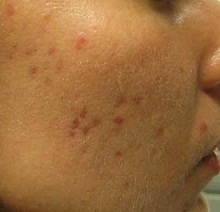
First formulated by Dr. Max Jessner, this combination, which pioneered superficial peeling agents, has been used by practitioners for many years.
Developed by New York dermatologist Dr. Max Jessner and also known as Jessner’s solution, this formula visibly reduces the appearance of fine lines and wrinkles while eliminating acne scars and skin blemishes, smoothes and softens the skin, enhances hydration and suppleness, and balances uneven skin tone.
Jessner’s Peel is a combination treatment for individuals dealing with acne, enlarged pores, excessive sebum production, and hyperpigmentation.
It should be administered by healthcare professionals for a superficial, sometimes medium-depth peeling procedure on the skin.
The formula contains Lactic Acid, Salicylic Acid, and Resorcinol, which are chemical exfoliants of moderate strength. These chemicals work together to provide epidermal exfoliation (desquamation), leaving the skin lighter and smoother. This formula is ideal for individuals with uneven skin texture, wrinkles, acne, fine lines, and sun damage.
Jessner’s solution is a peeling agent composed of 14% resorcinol, 14% lactic acid, and 14% salicylic acid in an alcohol base. It is a highly effective formula administered by professionals.
Resorcinol allergy may occur in some individuals. Therefore, this component can be excluded from the Jessner formula. This formulation is referred to as the Modified Jessner formula.
It can also be used safely and effectively on Black and Asian skin types.
Reported side effects:
Erythema, post-inflammatory hyperpigmentation.
It should not be used in pregnant women or in individuals with known allergies to any of the components.
This solution is applied to the skin with gentle, light strokes. A slight stinging sensation may be felt for a few minutes following application. The Jessner formula may be applied every two to three weeks until the desired result is achieved.
| Ingredient | Quantity |
|---|---|
| Salicylic acid | 14 g |
| Resorcinol | 14 g |
| Lactic acid 88% | 12 ml |
| Alcohol USP | qs 100 ml |
Ingredients in the formula:
Salicylic acid is a white or colorless acicular crystalline powder or white feathery crystalline powder. Its synthetic form is white and odorless. Salicylic acid is a beta-hydroxy acid with the chemical formula C6H4(OH)CO2H. This colorless, crystalline organic acid is generally used as a plant hormone. It is a metabolic product of salicin. It possesses chemical properties similar to acetylsalicylic acid, known as aspirin. It is also used in the treatment of acne and fungal species such as tinea barbae, tinea capitis, and tinea cruris. When prepared from natural methyl salicylate, it has a pale yellow or light pink color with a slight minty odor. It dissolves in water at 1:460, in boiling water at 1:15, in alcohol and ether at 1:3, and in chloroform at 1:45. Salicylic acid is a keratolytic drug. It is used in the treatment of hyperkeratotic and scaling skin disorders such as dandruff, seborrheic dermatitis, ichthyosis, psoriasis, and acne. Solutions and ointments used for this purpose are available. Salicylic acid accelerates desquamation (the peeling and shedding of the outer surface of any tissue). It exhibits mild fungicidal activity. Salicylic acid is rapidly absorbed through the skin and slowly eliminated via urine. Systemic acute salicylate poisoning (salicylism) may occur following the excessive application of salicylic acid over large skin areas. Fatalities resulting from such inappropriate application, predominantly involving children, have been reported. To minimize the risk of systemic absorption from topical application, salicylic acid should not be used for prolonged periods or in high concentrations, and application to large body surfaces or inflamed or broken skin should be avoided. Salicylic acid should be stored at room temperature below 30°C in tightly closed, airtight containers, protected from light.
It is a white crystalline substance with a characteristic odor. Its color turns reddish under the influence of air and light. It has a pungent taste. It is soluble in 1 part water and 1 part alcohol, as well as in ether, glycerin, and benzene, but insoluble in chloroform. It is incompatible with acetanilide, camphor, chloral hydrate, menthol, and phenol. Today, resorcinol is used externally as an antiseptic and disinfectant. Externally (ointment 10–20%, solution 0.1%), it is used in psoriasis, acne, seborrhea, eczema, and other skin diseases. Application to extensive surface areas should be avoided. Maximum dose is 0.50–1.5 g.
Lactic acid is a colorless or pale yellow, hygroscopic, odorless, syrupy liquid with an acidic taste. Lactic acid is miscible with water, alcohol, and ether, and practically insoluble in chloroform. It is classified as a corrosive poison. Lactic acid is applied topically. Lactic acid should be stored at room temperature below 30°C in tightly closed, airtight containers.
In ancient times, it was called the “water of life” and believed to be a cure for practically every disease. An important characteristic of alcohol is that it is an excellent solvent frequently used in most pharmaceutical formulations. While ethyl alcohol is effective at concentrations of 60–90%, a 70% concentration (vol/vol) demonstrates optimal efficacy for skin antisepsis. Conversely, when the concentration drops below 50%, it largely loses its activity. Alcohol exerts its effect by coagulating proteins and dissolving lipids. Because protein denaturation requires the presence of water, the antimicrobial effect of absolute (96%) alcohol is weak. Official USP alcohol has a minimum purity of approximately 99.6% v/v. It has a characteristic odor and taste, and is miscible in all proportions with water, ether, or chloroform.
Preparation of the formula:
When preparing Jessner’s solution, resorcinol and salicylic acid are dissolved in a sufficient amount of ethanol, followed by the addition of lactic acid, and finally brought to volume with the remainder of the ethanol.
Resorcinol allergy may occur in some individuals. Therefore, this component can be excluded from the Jessner formula. This formulation is termed the Modified Jessner formula.
The formula is used for superficial and sometimes medium-depth peeling.
It can also be used safely and effectively on Black and Asian skin.
Reported side effects:
Erythema, post-inflammatory hyperpigmentation.
It should not be used in pregnant women or in individuals with known allergies to any component.
The shelf life of this formulation is 6 months.
Wishing you a great week…
“`